New Roof Costs: How Much Should You Expect to Pay?
A leaking roof rarely picks a convenient moment to fail. Anyone searching for a new roof cost usually wants one thing first: a realistic number before a single call is made.
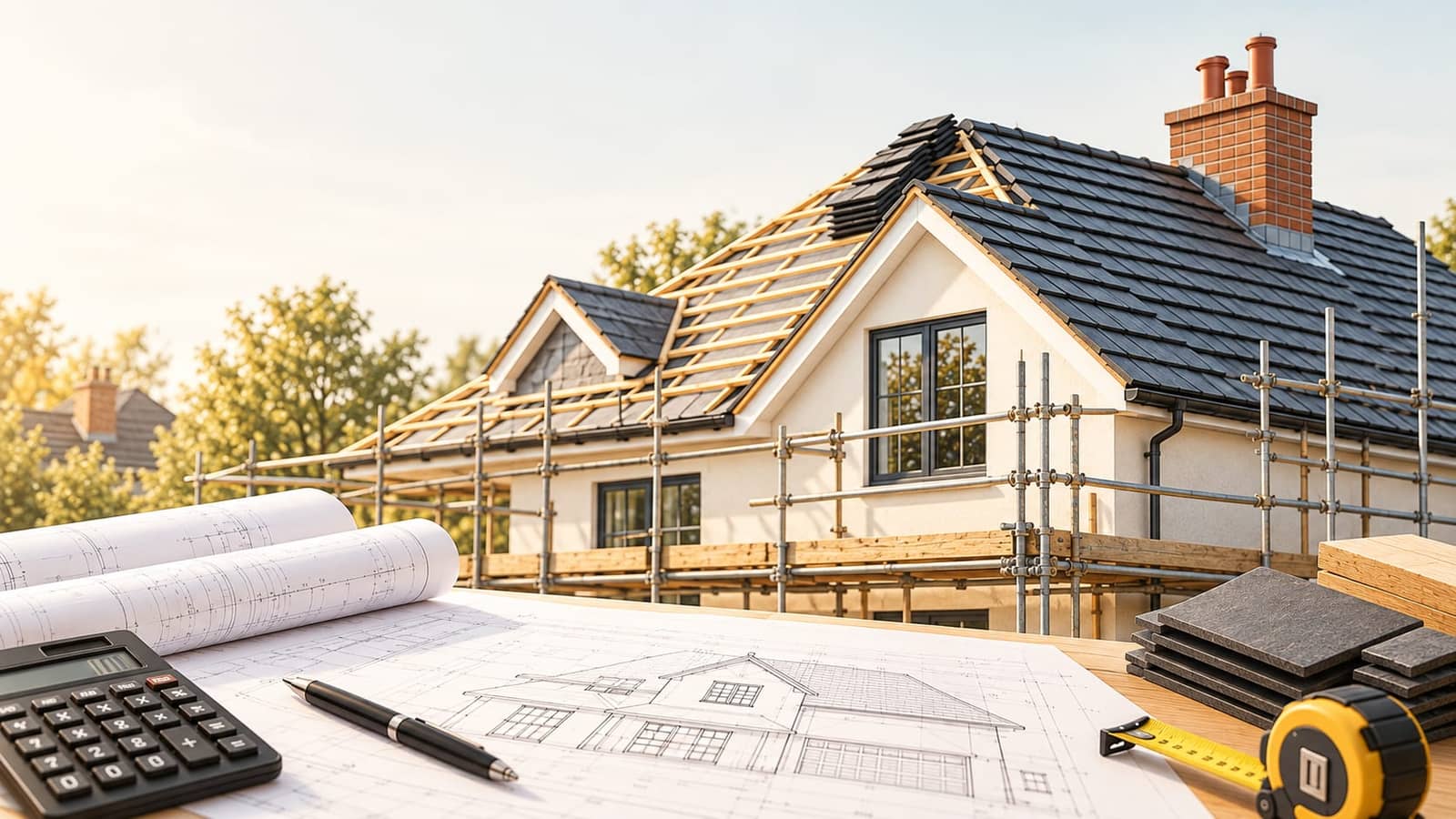
Prices swing widely once size, pitch, material and access are factored in. This guide breaks those variables down, flags the extras people often forget, and helps you compare quotes without the guesswork.
How Much Does a New Roof Cost?
There is no single national figure that fits every property. A sensible starting budget sits around £5,000 to £15,000 for a typical house. Larger or more complex roofs push well past that range. A straightforward pitched roof in standard concrete tiles tends to land nearer the lower end.
Slate, awkward valleys, chimney work and extensive timber repairs all add cost quickly. These figures are planning tools, not fixed prices. Treat them as a starting point before a survey confirms what your particular roof actually needs.
Always check whether VAT, scaffolding, waste removal and making good are included in an early quote. Omissions like these can make one estimate look far cheaper than another, when the real gap is simply what has been left out.
Average Roof Replacement Cost by Size and Type
Roof size is the obvious starting point, but it rarely tells the full story. Two quotes for roofs of a similar size can look very differently once pitch, roof shape and material enter the equation. A simple gable roof is generally cheaper to strip and cover than a hipped design with several valleys.
Material choice moves the roof replacement cost more than almost anything else. Standard concrete tiles sit at the affordable end. Natural slate and clay tiles sit higher, and specialist finishes push well beyond typical ranges. Compare like-for-like specifications wherever you can.
Chimneys, dormers and roof lights all add labour and materials. A property with several penetrations through the roof plane will usually cost more to reroof than a plain, uninterrupted pitch of the same size.
New Roof Price: What Drives the Figure
A new roof price is rarely one number pulled from a brochure. It reflects the roof's condition underneath the covering as much as the covering itself. Rotten battens, damaged rafters or old insulation can all surface once the existing tiles come off.
Access matters more than most homeowners expect. A roof reached easily from a driveway will cost less to scaffold than one hemmed in by neighbouring walls, a steep garden or restricted parking. Scaffolding alone can represent a meaningful share of the total bill.
Regional labour rates also shift the outcome. Roofers working in London and the South East typically charge more than those elsewhere. Local business costs there simply run higher.
Labour, Scaffolding and Waste Costs
The headline figure is usually split between materials, labour and site-specific preparation. Typical scope includes scaffolding, stripping the old covering, new membrane and battens, tiles or slates, flashings, ridge details and waste disposal.
Premium materials raise the budget quickly, but labour can rise too if a product is harder to install or needs extra preparation. Ask contractors to separate supply costs from fitting. That way, any later change in specification is easier to price fairly.
Skip hire and waste removal are frequently underestimated in early ballpark figures. Old tiles, timber and insulation all need proper disposal, and this cost should sit clearly inside the written quote rather than as a vague add-on.
Reroofing Cost: What Can Push It Higher
A reroofing cost can move a long way from the original estimate once work is underway. Discovering rotten timber, outdated insulation or unexpected structural movement are common causes of a revised price partway through a project.
Other factors include the number of chimneys, valleys and roof lights, plus whether lead flashing needs full replacement rather than a patch repair. Insulation upgrades, though optional in some cases, can also add a noticeable amount to the final figure.
Good contractors flag these possibilities before work starts. If an item cannot be confirmed until the old covering is removed, it should appear as a provisional sum. A single, misleadingly total helps nobody.
Repair or Replace: Which Makes Sense?
Full replacement makes sense once a roof is near the end of its working life. It also suits cases where repeated repairs solve nothing. A targeted repair can be better value if the structure is sound and the fault is isolated to one small area.
Before deciding, ask for evidence rather than relying on guesswork. Photographs, a clear written diagnosis and separate prices for repair and replacement give you something solid to weigh up. That beats relying purely on instinct.
Roof Cost UK: Regional and Seasonal Factors
Roof cost UK figures vary noticeably by region, largely due to differences in labour rates and material transport. Properties in cities and the South East tend to sit at the higher end of any quoted range.
Timing also plays a part. Booking work outside the busiest autumn and winter months can sometimes bring better availability. Roofers are less stretched across urgent storm-damage jobs during quieter periods.
Local planning regulations can also be complicated, especially for listed buildings or those within conservation areas. Matching materials and traditional methods may be required.
Questions to Ask Before Accepting a Roofing Quote
Give every contractor the same information: roof size, pitch, material preference, access notes and a written scope. This makes quotes genuinely comparable, rather than receiving three different answers to three different questions.
Check whether VAT, scaffolding, waste, making good, warranties and payment stages are included. If two prices are far apart, ask why before assuming the cheaper option is automatically the better one.
Compare Builders can help move you from a rough budget towards suitable, vetted professionals, without turning the process into an avalanche of unwanted cold calls.
How to Compare Roofers Fairly
Consistency is the key to a fair comparison. Provide the same photographs, measurements and scope to each roofer, and ask them to itemise materials, labour and any provisional sums separately.
Look beyond the bottom line. A slightly higher quote including full scaffolding, proper waste disposal and a clear warranty may be better value. A cheaper figure with gaps in its scope often costs more later.
Compare Builders matches homeowners with vetted, trusted builders based on transparent trust information, rather than simply promoting whichever roofer pays the most to appear first.
Every roof is different, and so is every quote you'll receive. Start your project with Compare Builders and let vetted roofers price the job properly.
New Roof FAQs
Will an early estimate match the final invoice?
Not usually. A ballpark figure helps with early planning, but the roofer needs to see the actual roof, its timber and access before quoting firmly.
Is it worth asking several roofers to price the same job?
Yes, in most cases. Putting three quotes side by side, built on identical information, makes it far easier to spot a gap or an inflated allowance.
What contingency is sensible for a roof project?
Many homeowners set aside roughly 10 to 15 percent above the quoted price. Older properties or roofs with hidden timber issues may need a larger buffer.
Are there ways to bring the price down without cutting corners?
A simpler roof shape, reusing sound existing structure and confirming materials early all help control spend. Skimping on waterproofing or structural repairs stores up bigger bills later.
What's the smartest first step before contacting roofers?
Work out a realistic budget, write down what the job actually involves, then send that same brief to a shortlist of vetted builders for pricing.