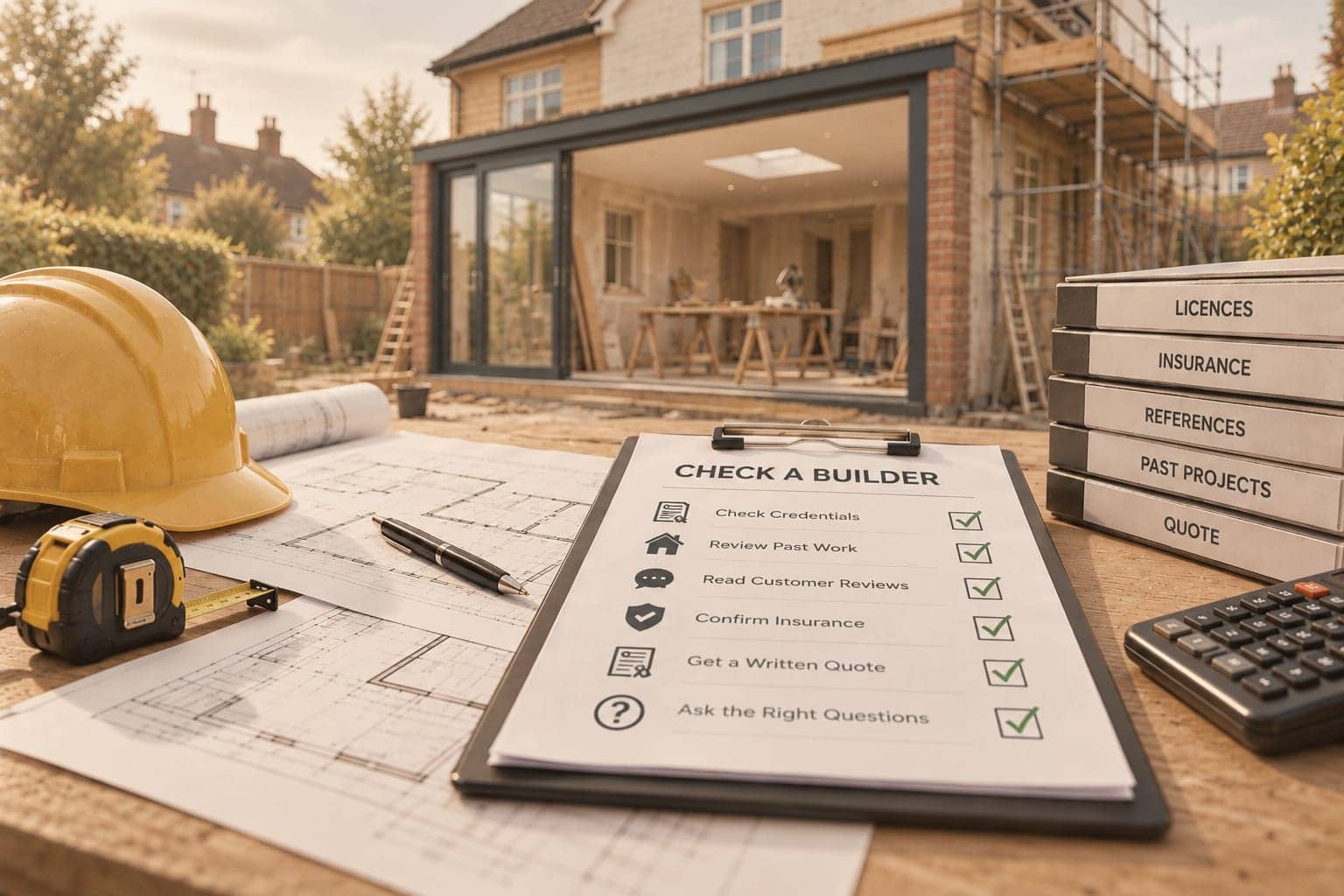
This guide sets out how to check a builder before any money changes hands, covering insurance, reviews, references, quotes and contracts. Follow it, and you will know exactly what to verify before work begins.
Why You Need to Check a Builder Before You Sign Anything
There isn't one magic check that tells you everything you need to know. Insurance covers one kind of risk, reviews cover another, and paperwork covers a third. Put them together and a much clearer picture starts to form. That's really what it means to check a builder properly: gathering enough evidence that you're not just going on a gut feeling.
Compare Builders was built with this in mind. Rather than handing your details to every tradesperson within a 20 radius, the platform matches you with people who've already been through some of this groundwork.
Start With the Basics: Confirming Who You're Dealing With
Before anything else, get the simple facts straight. Check the legal or trading name, contact details, business address, and Companies House details if they apply. Do these all line up with what's on the quote, the invoice and the insurance certificate?
They should. A short trading history isn't necessarily a problem, plenty of good builders are relatively new. What matters more is whether the story holds together. If something doesn't add up, ask about it before you send a single penny towards deposits or materials.
How to Vet a Builder's Insurance
Public liability insurance tends to be the first thing worth asking about. It's what responds if something goes wrong on site, whether that's damage to your property or an injury during the work. Employers' liability cover matters too, if the builder has staff working alongside them.
Here's the part people skip: actually looking at the certificate. Knowing how to vet a builder isn't about taking their word for it, it's about checking the policyholder name, the dates, the limits and what activities are covered. For bigger jobs, ask whether contract works or professional indemnity cover applies as well.
What Builder Reviews Really Tell You
A five-star average doesn't tell you much on its own. What's more useful is reading a handful of reviews properly, how did they handle communication, timekeeping, changes to the plan, or snagging once the job wrapped up?
Spread your reading across a couple of platforms rather than just one, and give more weight to recent reviews than old ones. Oddly enough, a builder with fifteen detailed, specific reviews can often be a safer bet than one with three hundred generic ones.
A Builder Background Check Starts With References
References only earn their keep if you actually call them. Ask about the finished price versus the quoted one did it creep up, and if so, why? A decent builder background check also covers whether the timeline was realistic, not just whether the work looked good in the end.
If you can view a completed project in person, do it. Photos can hide a lot. Just go through the builder to arrange it, and be considerate of the homeowner's time and privacy.
Qualifications: When They Matter and When They Don't
For regulated trades, this bit isn't optional. Gas, electrical and certain specialist installations need to be done and signed off by someone properly qualified, no exceptions worth taking.
For general building work, it's a bit different. Experience, a solid track record and how they run their business often say more than a certificate on a wall. Where a qualification is claimed, check it against the actual issuing body's register, not just a badge sitting on a website.
Get a Detailed Written Quote Before You Agree Anything
A real quote spells things out: the work involved, key materials, price, VAT, timeline and how payments are staged. An estimate is a rougher figure, and any decent builder will tell you as much upfront.
Don't put a detailed quote from one builder next to a scribbled total from another, it's not a fair comparison. Getting this right also makes choosing a builder considerably less stressful, purely because you're comparing like with like. Send everyone the same brief, and ask them to flag any exclusions or provisional sums clearly.
Deposits, Payment Schedules and Contracts
A fair deposit reflects what's actually being committed at that stage, whether that's labour, materials or both. If someone's asking for a large chunk of the total before they've even started, that needs a proper explanation.
Put milestone payments in writing and keep a paper trail as you go. A solid contract covers scope, price, timeline, and just as importantly what happens if either side needs to walk away partway through.
Red Flags That Should Make You Walk Away
Cash-only deposits, pushy timelines, no written scope these are the classics for a reason. Add in vanishing contact details, references that don't quite check out, or dodging simple questions, and the picture gets worse fast.
Any one of these might have a reasonable explanation behind it. Two or three together usually mean it's time to slow right down and ask harder questions before going any further.
How to Check a Builder with Compare Builders
Choosing a builder shouldn't feel like guesswork, but honestly, it often does. A decent vetting process takes some of that uncertainty off your plate before you've even had a conversation. That's the gap Compare Builders is trying to close, connecting homeowners with builders who've already been through relevant checks.
None of this replaces your own judgement on the day, though. Verification narrows the odds; it doesn't remove risk entirely. Look at the quote, the current paperwork, the references and the contract for your specific job before you appoint anyone.
Start your project with Compare Builders and get matched with vetted builders suited to the work you actually need doing.
Builder Checking FAQs
Does a good review score mean a builder is safe to hire?
Not on its own. Use it alongside insurance checks, references and a proper written quote.
Should I ask for insurance before paying a deposit?
Yes, where insurance is relevant to the work involved. Ask for current proof before you appoint anyone.
Is "vetted" a guarantee?
No, and any platform claiming otherwise is overselling it. Vetting cuts down avoidable risk, but you still need to know how to vet a builder for your own specific job.
What if a builder won't provide references?
Ask why, then decide whether you've got enough evidence to feel confident a solid builder background check or a handful of verified reviews can sometimes fill that gap.
What's the single biggest red flag?
Being rushed while basic questions about identity, price or paperwork go unanswered. If there's one thing worth taking from this guide on how to check a builder, it's that.
Do the groundwork properly, and the rest of the project usually looks after itself it really is that simple to check a builder before committing.
Ready to put this into practice?
Tell us about your project and get matched with verified builders. Or check any builder by their CB number.