House Renovation Costs: What Does a Full Renovation Cost?
Renovating a home can make everyday living easier, but working out the budget is rarely straightforward.
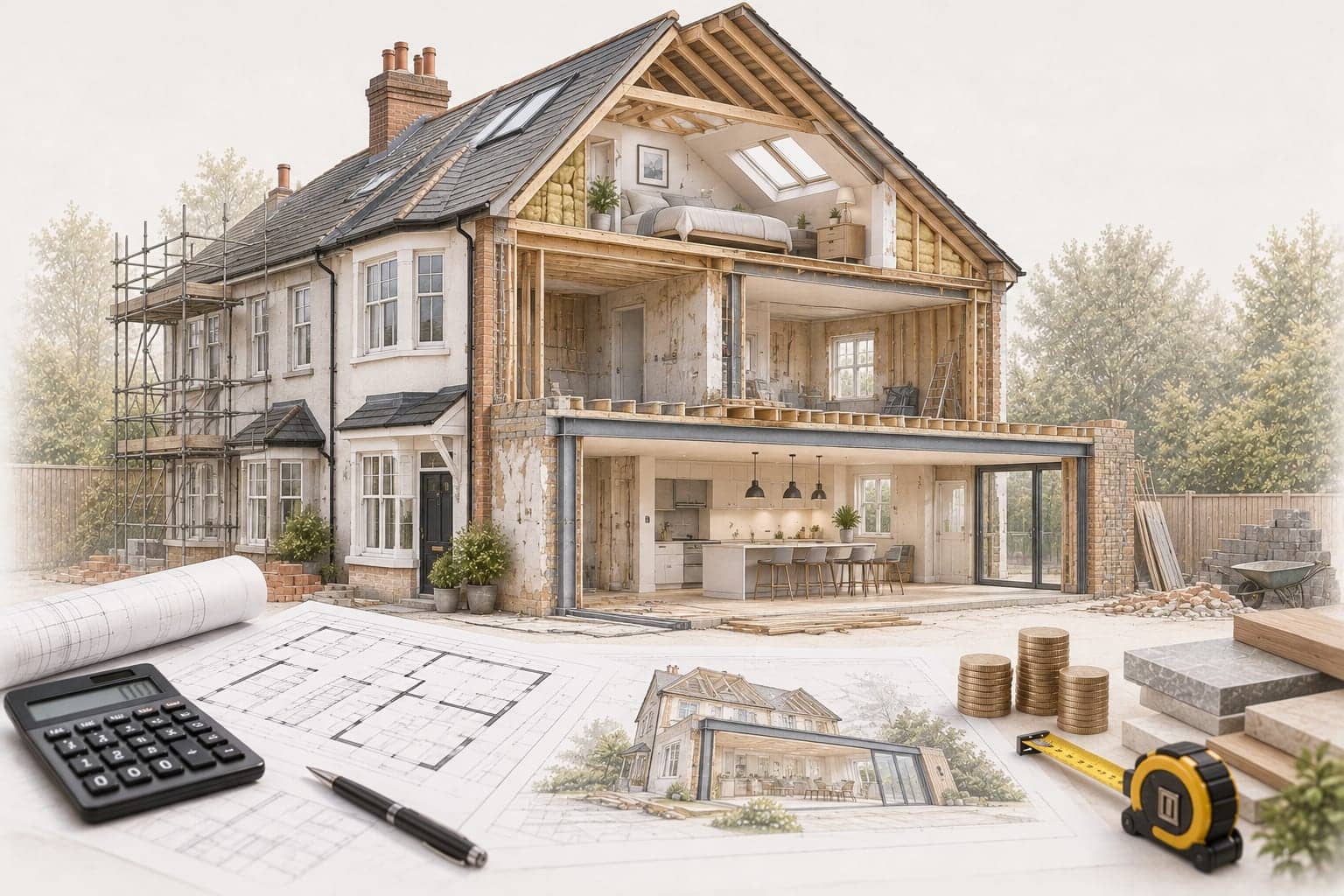
A typical house renovation cost may begin at around £600 to £1,000 per m² for lighter refurbishment. More extensive work can rise to £1,500 to £2,500+ per m².
Those figures are best treated as a starting point. The condition of the property, chosen finishes, and amount of structural work can all shift the final total.
Before asking builders for prices, it helps to have a clear idea of what you want to change and what you want to keep.
How Much Does a House Renovation Cost?
The answer depends heavily on the scale of the work. A lighter refurbishment might include decorating, plastering, flooring and general repairs. Projects of this type may fall within the £600 to £1,000 per m² range.
A more involved renovation can include plumbing, heating, rewiring, bathrooms, kitchens and changes to the structure.
For that level of work, costs may reach around £1,500 to £2,500+ per m². A large renovation with extensive building work can exceed £100,000.
That does not mean every project will reach the same figure. A builder will need to understand the property and specification before giving a detailed quotation.
Typical Home Renovation Cost by Property Size
A bigger house will usually cost more to renovate, although square footage does not tell the whole story.
More rooms mean more flooring, decorating, plastering and materials. Extra bathrooms or longer plumbing runs can also increase labour.
The home renovation cost can still vary greatly between properties of a similar size.
One house may need little more than cosmetic work. Another may have outdated electrics, damaged plaster, damp, or heating that needs replacing. For that reason, builders should price the actual scope rather than relying only on floor area.
Light Renovation vs Full House Renovation Cost
A light renovation usually concentrates on improving what is already there. That might involve redecorating, replacing flooring, repairing plaster and updating tired fixtures.
The full house renovation cost can be much higher once major systems or structural elements enter the picture.
Larger projects may involve new plumbing, heating, electrics, bathrooms, kitchens and alterations to internal walls.
Older homes can also hide problems behind existing finishes. Removing floors or plaster may reveal damp, damaged timber or outdated services. A survey and a clear specification can make those risks easier to manage before work begins.
Kitchen and Bathroom Renovation Costs
Kitchens and bathrooms often take a sizeable share of a renovation budget. Both spaces can involve plumbing, electrics, ventilation, fitting and finishing work. Changing the layout can add even more labour.
Moving a sink, shower or toilet usually creates more work than keeping services close to their existing positions. The home renovation cost will also depend on the products you choose.
Standard fittings can keep spending under control, while bespoke units and premium finishes can quickly raise the total. Choosing key products before builders quote can make their pricing easier to compare.
Rewiring, Plumbing and Heating Costs
Service upgrades are easy to overlook during the early planning stage. Older homes may need work to wiring, pipework or heating before new finishes go in.
A full renovation involving heating, rewiring, kitchens, bathrooms and structural work can exceed £100,000.
That figure should not be treated as a standard price for every property. The final amount depends on how much work the house actually needs. Ask builders to state clearly what their quote includes.
Testing, certification, and making good should be easy to identify rather than hidden inside a general allowance.
Structural Work and Renovation Price UK
Structural work can change both the budget and the timetable. Removing a wall, creating a new opening or repairing part of the building may require additional expertise.
The renovation price in the UK can also change after work begins. Some issues only become visible once walls, floors or ceilings are opened.
Builders should make allowances and exclusions clear from the start. Provisional items are easier to understand than unexpected additions later.
What Affects Your Total Renovation Budget?
No two renovation projects are exactly alike. The property's condition is usually one of the biggest influences on cost. Damp, poor plumbing, old wiring, and structural defects can all add work.
The chosen finish matters too. Basic flooring and standard fittings will create a different budget from bespoke joinery, premium kitchens or specialist glazing.
Access can make a difference as well. Restricted parking, narrow entrances and limited storage can slow down deliveries and day-to-day work.
Your overall house renovation cost should therefore reflect the property in front of you, not just a national guide figure.
Making design decisions early can also help. Late changes tend to create extra labour, wasted materials and delays.
How Much Contingency Should You Allow?
Renovation work can uncover things that were impossible to see beforehand. Some homeowners choose to keep a contingency within their overall renovation budget to allow for unforeseen work. The appropriate amount will depend on the property's condition and the uncertainty involved in the project.
An older home may justify a larger buffer, especially if extensive opening-up work is planned.
Keep that money separate from upgrades and optional finishes. It is there to cover genuine surprises.
It is also worth checking whether VAT, waste, scaffolding and final finishes appear in the quotation.
How to Compare Builder Quotes for a Renovation
Good comparisons start with good information. Give every contractor the same drawings, room measurements, access details and finish requirements.
A useful renovation price UK comparison should focus on what is included, not simply which total looks cheapest.
Check payment stages, assumptions, exclusions, warranties, testing and making good.
Compare Builders introduces homeowners to verified trades. You describe your renovation project, choose three verified builders from those interested in it, and compare three quotations side by side. The service is free for homeowners.
The contract for the renovation work is between you and the trade you appoint. Before comparing formal quotations, the Compare Builders Cost Planner can give you an indicative budget range for your project type and area.
House Renovation Cost FAQs
Is the price fixed?
No. Early cost figures are only there to help with initial planning. The final quotation will depend on the property, the agreed work, the chosen specification and the contract terms.
Should I compare several quotes?
In most cases, yes. By looking at more than one quotation, you can identify missing items, different assumptions, and allowances that are too high or low.
What contingency should I budget for?
10 to 15% is a good amount to save for many renovation projects. Older properties or homes where there is a higher chance of hidden problems may need a bigger buffer.
Can I keep the price down?
Yes, in some areas. A simple layout and leaving the plumbing or electrical points where they are can avoid extra work.
Choosing finishes prior to construction also helps to reduce last-minute changes, but do not sacrifice needed structural, electrical, and compliance work just to save money.
Before getting quotes, what should I do?
Begin with a realistic budget and a clear outline of the work you want carried out. Give each suitable builder the same project details so the quotations are easier to compare.
The Compare Builders Cost Planner can also provide you with an indicative starting range before you request formal quotations.