Driveway Costs: How Much Does a New Driveway Cost?
First impressions start at the kerb. A well-laid driveway can improve kerb appeal, drainage and the overall appearance of a property. The question most homeowners reach for first is: what will it cost?
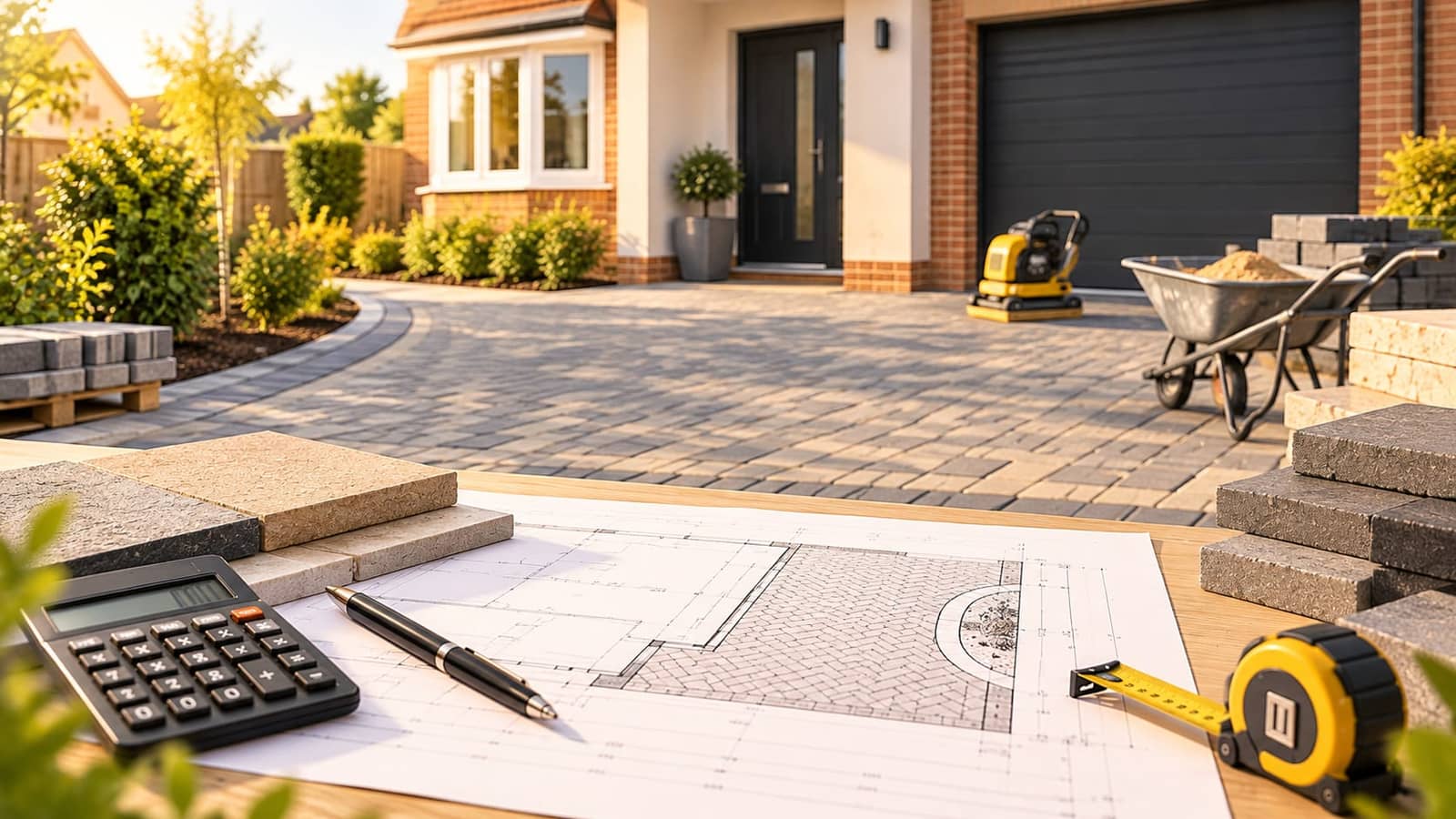
The honest answer depends on surface type, area, preparation, drainage and access. This guide breaks down the main variables, the extras that catch most budgets out, and what to check before you invite a contractor to quote.
How Much Does a New Driveway Cost?
Driveway costs vary considerably depending on the surface, area, ground conditions, preparation and drainage requirements. A straightforward gravel driveway will generally cost less than a resin-bound, tarmac or block-paved surface, while extensive excavation or drainage work can increase the total.
New driveway cost varies considerably even for the same surface type. Site conditions, access, excavation depth and the existing sub-base all affect the final figure. The driveway cost that appears on a quote depends entirely on what that quote includes. Check whether VAT, waste removal, edging, drainage and making good are accounted for. Omissions can make an early figure look considerably cheaper than it turns out to be.
Driveway Prices by Surface Type
Different surfaces produce very different totals, even when the finished area is identical. The cheaper option is not always the right one. Suitability depends on the existing ground conditions, drainage requirements, planning constraints and the result you are trying to achieve.
When comparing surfaces, ask for like-for-like assumptions on excavation depth, sub-base specification, edging and drainage. That is the only reliable way to judge whether a higher-priced quote is buying a better specification or simply covering more work.
Block Paving Cost
Block paving remains a popular choice for UK residential driveways. It offers considerable design flexibility, with a range of colours, patterns and edging options. It is also one of the more labour-intensive surfaces to lay correctly.
Block paving cost can vary significantly depending on the blocks selected, preparation required, driveway size and installation method. A 50m² driveway at £60 to £120 per m² would produce a basic surface and installation figure of around £3,000 to £6,000 before additional drainage, dropped kerb works or decorative edging.
The pattern and block type both affect price. Herringbone laying can provide good resistance to vehicle movement, while other patterns may offer a different appearance and installation cost.Sub-base depth is an important consideration when comparing quotes. The required depth depends on the ground conditions, expected loading and construction specification. Cutting preparation to reduce the initial price can lead to settlement and other problems later.
Resin Driveway Cost, Tarmac and Gravel
Resin driveway cost typically falls between £50 and £80 per m² for a resin-bound system, depending on the specification and preparation required. Resin-bound surfaces can be permeable when installed as part of a suitable system on an appropriate base.
Tarmac can sit between £40 and £60 per m² for a standard installation. It is fast to lay, durable and relatively low-maintenance. Design options are more limited compared with block paving or resin, but tarmac remains a practical choice for larger areas.
Gravel is typically one of the lower-cost driveway options, from around £20 to £40 per m² installed. It provides good surface drainage, although the underlying site and drainage arrangements still need to be considered. Regular raking and periodic topping-up are the main maintenance requirements.
Ground Preparation and Drainage Costs
Ground preparation is the part of a driveway project most likely to expand once work begins. A typical scope can cover excavation to the required depth, disposal of arisings, a compacted hardcore or MOT Type 1 sub-base, edging restraints and the finished surface. Drainage channels, gullies or soakaways may sit outside that base scope and carry their own cost.
Ask every contractor to state excavation depth, sub-base specification and drainage assumptions in writing. These are important items to compare between quotes. Ground conditions that cannot be confirmed before breaking out the existing surface should be identified clearly, with appropriate allowances made where necessary.
Drainage is also an important planning consideration. Where a new driveway uses an impermeable surface, the relevant planning and sustainable drainage requirements should be checked before work begins. Permeable surfaces can help with surface-water management, but the suitability of the drainage solution still depends on the site and installation.
What Affects the Final Driveway Cost?
Several variables move the figure materially beyond the surface rate alone.
Area: The total m² is the starting point, but irregular shapes, tight access and narrow side passages can increase labour time relative to a simple rectangular plot.
Excavation depth: A driveway carrying vehicles needs an appropriately designed and compacted sub-base. Soft, unstable or waterlogged ground may require additional preparation.
Drainage: A channel drain across the entrance, a gully connecting to existing drainage or a soakaway can all carry separate costs. Omitting necessary drainage to reduce new driveway cost can create problems later.
Dropped kerb: A new driveway accessing a public road may require a dropped kerb and approval from the relevant highway authority. Costs vary by council, contractor and the work involved, so obtain a local quotation before setting your budget.
Edging and finishing: Decorative edging, contrasting borders or step details all add to the total. Agree these at the quoting stage rather than treating them as included.
Planning and Dropped Kerb Considerations
Not every driveway project requires planning permission, but some do. Check the position before work starts. The planning position can depend on the surface, drainage arrangements, size of the driveway and property.
Where an impermeable driveway is proposed, check the applicable rules and whether an appropriate drainage solution can be incorporated. Permeable surfaces may help meet drainage requirements, but they do not automatically remove every planning or drainage consideration.
Dropped kerb applications are made to the relevant highway authority rather than simply being treated as part of the driveway installation. Requirements and approved contractors vary between councils. Allow sufficient time for any application or approval before arranging the driveway works.
Conservation areas and listed buildings can carry additional restrictions. Confirm the position with your local authority before instructing any contractor.
How to compare builder quotes properly, not just on price
Give every contractor identical information: the driveway area, access details, surface preference, edging requirements, drainage needs and any dropped kerb works. Compare inclusions, not headline totals.
Check whether VAT, waste removal, excavation, sub-base, edging, drainage and making good to paths and planting are each included. Two driveway prices that appear far apart often converge once both are assessed against the same scope. If a gap remains, ask specifically which items differ before assuming the lower price is the better deal.
Set your own range before you read a single quote. The Cost Planner gives an indicative budget range for your job type and postcode area, so you know whether a figure is low because it is competitive or low because something is missing.
Compare Builders matches homeowners with vetted, verified tradespeople. Interested contractors put themselves forward for your project. You choose three to quote, review them on a level footing, and appoint the one you want, with no cold calls or number selling.
Driveway Cost FAQs
Is the driveway cost figure guaranteed?
No. Early cost guides are budgeting tools. A firm price depends on the exact scope, ground conditions, surface specification and the contract terms agreed with your appointed contractor.
What does block paving typically cost?
A base block paving cost quote generally covers excavation, sub-base, edging restraints and the block surface itself. Drainage channels, dropped kerb works, decorative borders and disposal of an existing surface may sit outside the base figure. Always request a written schedule of inclusions.
Is resin driveway cost higher than tarmac?
Generally, yes, on a per-m² basis. Resin driveway cost can be higher because of material and installation requirements. The final difference depends on the specification, preparation and drainage arrangements for each project.
Do I need planning permission for a new driveway?
Not always. The requirement depends on factors including the proposed surface, drainage arrangements, property and location. Where an impermeable surface is proposed, check the applicable planning and drainage requirements before work starts. A dropped kerb onto a public road may require separate approval from the relevant highway authority.
How much contingency should I allow?
A separate contingency can be useful for a driveway project, particularly where ground conditions or the existing surface are uncertain. Allow more where excavation may reveal additional work, existing drainage is old or approval for a dropped kerb is still pending.
What should I do first?
Set a realistic budget using the Cost Planner, define the surface type and scope, then approach vetted builders with identical written information. Compare Builders makes it straightforward to move from an indicative driveway cost range to three comparable quotations from verified tradespeople, without the usual flood of cold calls.
Ready to move from budget to builder?
Use the Cost Planner to get your indicative range, then start your project on Compare Builders. Every builder shown to homeowners is already verified. You choose three builders to quote. Only the builder you appoint ever pays, and only when they win the work.