Bathroom Renovation Costs: What Should You Budget?
Every UK homeowner asks the same question before ripping out an old suite: what does a bathroom renovation cost?
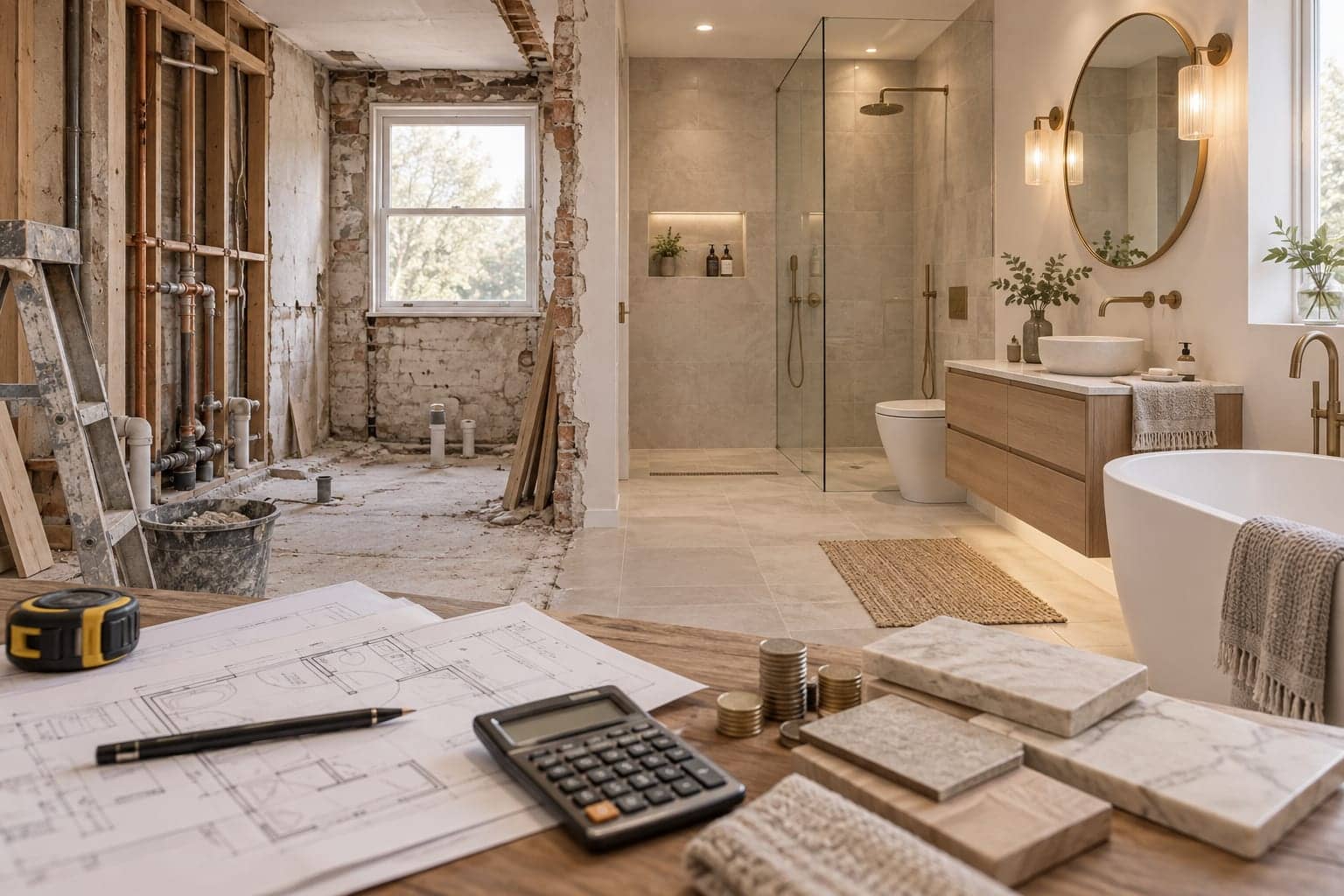
There isn't one tidy figure that fits every property, but there is a sensible way to plan your budget.
Prices swing depending on the age of your home, the state of existing pipework and how far you want to push the finish. This guide walks you through the typical price ranges, the choices that push costs up or down, and the questions worth asking before you compare quotes.
Read it before you contact a single tradesperson, and you'll go into those conversations with realistic expectations.
What Is the Average Bathroom Renovation Cost in the UK?
Budget somewhere in the region of £5,000 to £15,000+ for a full refit, though this is only a starting point. A straightforward suite swap with pipework left in place usually sits at the lower end of that range.
Add tiling from floor to ceiling, moved plumbing or premium brassware, and the new bathroom cost climbs quickly. A mid-range project with a mix of ceramic tiling, a decent shower enclosure and a standard suite tends to land somewhere in the middle.
Push into freestanding baths, bespoke joinery or natural stone finishes, and you're firmly into premium territory. Treat these figures as planning tools rather than fixed quotes, since surveys and site conditions haven't been factored in yet.
Location matters too, since labour rates in London and the South East generally run higher than in other parts of the country. Compare quotes against the same written scope, so one builder isn't pricing a fuller job than another.
What Affects Bathroom Refurbishment Cost?
Several factors decide where your project lands within that range. Room size, tile choice, sanitaryware and whether pipework needs to move all play a part. Concealed cisterns, walk-in shower systems and extra ventilation work add further cost on top.
A small en-suite with basic fittings will generally cost less than a large family bathroom with underfloor heating and a separate bath and shower. Even small upgrades can shift the bathroom remodel price more than most homeowners expect.
Swapping a standard extractor fan for a humidity-sensing unit, or choosing rectified tiles over standard ones, both add up. It helps to prioritise which features matter most before quotes start landing in your inbox, so you're not tempted to add extras once the numbers are in front of you.
Suite, Tiles and Fitting: Where the Bathroom Remodel Price Goes
Most quotes are split into materials, labour and preparation work. Typical scope covers strip-out, sanitaryware, plumbing, tiling, waterproofing, electrics, ventilation, fitting and decorating.
Higher-spec materials raise the bill, but labour costs shift too when products are trickier to fit. Large-format porcelain tiles, for instance, need a flatter substrate and more careful handling than smaller standard tiles, which pushes fitting time up.
Natural stone brings its own demands, including sealing and more delicate cutting around fittings. Sanitaryware brands can also vary widely in price for what looks like a similar product, so it's worth asking your builder to explain the difference between ranges.
Ask your builder to separate supply costs from fitting costs. That way, any later upgrade shows clearly whether the change relates to the product, the installation, or both.
Plumbing, Electrics and Hidden Costs
Services and hidden construction work often catch homeowners out. Existing wiring, plumbing, drainage and insulation deserve an early check, ideally before a firm quote gets agreed.
Older properties can still have lead or galvanised steel pipework behind the walls, which usually needs replacing as part of any serious renovation. Electrics in bathrooms also fall under strict zoning rules, so older circuits may need updating to meet current regulations.
Some items simply can't be confirmed until strip-out begins, so agree how those will be priced and approved in writing. A clear variation process protects both sides once work starts.
It also stops the new bathroom cost creeping upward without any real explanation, which is one of the most common sources of dispute on renovation projects.
What Increases Your Bathroom Refurbishment Cost?
Room size, tile choice, sanitaryware, moved services, concealed fittings, shower systems, ventilation and remedial work are the main levers here. A single change in one area can shift the total more than you'd expect.
Moving a waste pipe, adding glazing, or discovering damp beneath old tiles can all introduce costs nobody spotted early on. Structural work is another common surprise, particularly in older homes where floor joists may need strengthening to take the weight of a large bath or a stone floor.
Good quotes flag assumptions clearly, marking uncertain items as allowances rather than folding them into one vague total. If your builder can't say for certain what's behind an old tiled wall, that uncertainty should be written down rather than glossed over.
Budget vs Premium Bathroom Renovation Cost
Clarity matters more than a single headline figure at this stage. A budget refit sticks to standard fittings and keeps services roughly where they already are, which keeps both material and labour costs down.
A premium bathroom renovation cost usually reflects bespoke tiling, underfloor heating, freestanding baths or moved plumbing runs. Wet rooms sit at the higher end too, since they need more extensive waterproofing and careful falls in the floor to drain properly.
Neither approach is wrong, and the right choice depends on how long you plan to stay in the property and what buyers in your area typically expect. Ask your contractor to state assumptions and exclusions in writing, particularly if the property can't be fully inspected before work starts.
That gives you a fairer basis for comparing prices once the quotes come in.
How Long Does a Bathroom Renovation Take?
Most standard bathrooms take one to three weeks on site, assuming materials arrive on schedule and no major faults surface underneath. A typical programme runs through strip-out, first-fix plumbing and electrics, waterproofing, tiling, then second-fix and decorating.
Larger or more complex projects, particularly those involving wet rooms or structural changes, can run closer to four weeks. Design decisions, planning matters where relevant, and ordering long-lead products can all add weeks before work even begins, especially with bespoke tiles or imported sanitaryware.
Ask for a proposed start date and an estimated duration. Then confirm how delays, changes of mind and unexpected repairs will be handled along the way, so there's no confusion once the work is under way.
Comparing Quotes for Your New Bathroom
Give every contractor the same brief: room dimensions, product expectations, access notes and a written scope. Compare what's included rather than the bottom line alone.
Check VAT, waste removal, scaffolding, making good, testing and payment stages across each quote you receive. Ask how each builder handles unforeseen issues, since the answer often tells you more about their reliability than the price itself.
If one price sits far below the others, ask why before assuming it's automatically the better deal. A quote that looks cheap on paper can end up costing more once missing items get added back in.
Compare Builders for Your Bathroom Project
Moving from a rough budget to a genuine quote is easier with the right groundwork in place. Compare Builders matches your project with suitable, vetted tradespeople, without the flood of cold calls that often follows a general online enquiry.
Every builder on the platform goes through a vetting process before they're matched with a project, so you're not starting from scratch with unfamiliar names. Set your budget, define your scope, then let us introduce you to builders who actually fit the job.
Every bathroom throws up its own surprises, from old pipework to a floor that needs strengthening. Try the Cost Planner to see how those specifics translate into a real number for your project.
Bathroom Renovation Cost FAQs
Is the price guaranteed?
No. Early figures are planning tools. A firm price depends on the exact scope, property and contract terms agreed with your builder, and it can only be confirmed once a survey and detailed specification are in place.
Should I get more than one quote?
Usually, yes. Comparable quotes expose gaps in scope and highlight unusually high or low allowances. Three quotes based on the same written brief give you a realistic sense of the market rate for your project.
How much contingency should I keep?
Around 10 to 15% is a sensible starting point, with more set aside for older or uncertain properties. Homes with older plumbing or unknown wall construction warrant a larger buffer, since surprises are more likely once work begins.
Can I reduce the cost?
Simplifying the layout, keeping services in place and deciding finishes early all help. Cutting waterproofing, electrical work or compliance checks is a false saving in the long run, since problems left unresolved tend to cost more to fix later.
What should I do first?
Set a realistic budget, define your scope clearly, then compare suitable builders using the same information. Having a clear brief ready before you approach anyone will save time for both you and the tradespeople you contact.