Vetted Builders: What Does Vetted Actually Mean?
"Vetted builder" sounds reassuring until you ask what actually sits behind the word. Some sites use it loosely, more marketing than method. Others treat it as a genuine screening step before anyone reaches your inbox.
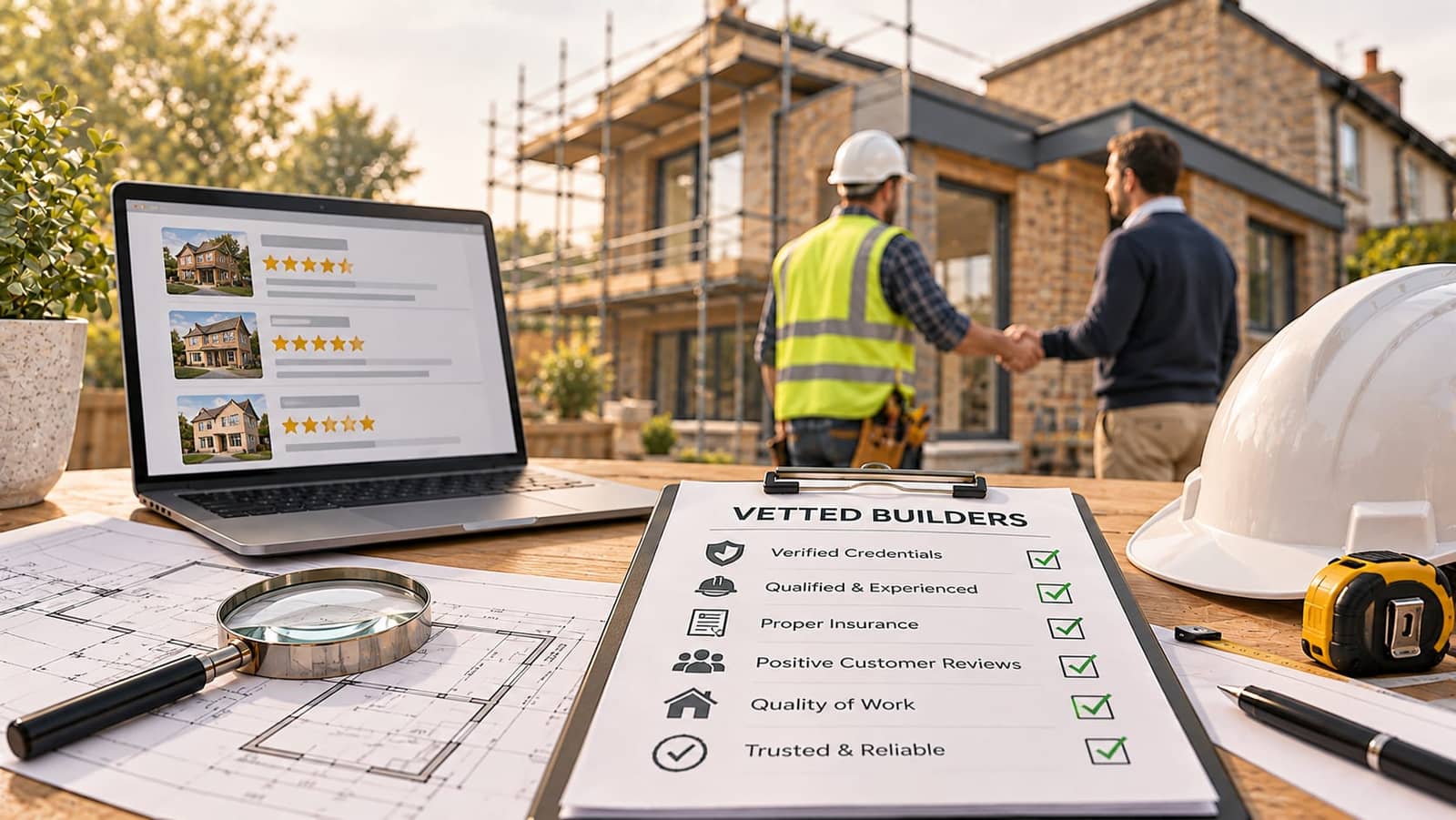
Homeowners deserve clarity before sharing a budget, a phone number or a set of keys. This guide explains what proper vetting involves before you contact vetted local builders. It also covers what vetting can't promise, and how Compare Builders handles the process from the first enquiry.
What Does "Vetted Builders" Actually Mean?
Vetting should mean meaningful checks happen before a professional gets anywhere near your project. It isn't a promise that nothing can go wrong once work starts. The purpose is narrower and more useful than that: reduce avoidable risk and replace guesswork with evidence.
Compare Builders works on that same principle. Homeowners set out the job, relevant tradespeople get checked, and the goal is a sensible match rather than a flood of cold callers. Verification supports your decision; it never replaces your own final checks before signing anything.
How Compare Builders Checks Verified Builders
Every profile goes through a screening step before it reaches a homeowner's shortlist. That process looks at business identity, trading history, current insurance and any credentials the trade requires. Reviews and previous work sit alongside these records rather than replacing them.
None of this removes the need for your own checks. Before appointing anyone, read the quote carefully, confirm current certificates and check that references still stand up. Compare Builders narrows the field, but you still make the final call on your own project.
Insurance and Business Checks for Approved Builders
Public liability insurance matters because it can respond to certain claims involving injury or property damage on-site. Ask to see the current certificate rather than accepting a verbal assurance. Check the policyholder name, the dates and the limits against what you're actually told.
If the builder employs staff, employers' liability cover is usually a legal requirement too. Larger or more technical jobs may call for contract works or professional indemnity insurance as well. None of this guarantees good workmanship, but its absence should raise a flag.
Reputable professionals should produce this paperwork promptly and without hesitation. A trader who stalls, or offers excuses instead of documents, is telling you something worth hearing before work even starts. Keep copies of whatever you're shown for your own records.
Reviews, References and Previous Work
Read reviews for patterns, not just the star average. Useful feedback mentions communication, punctuality, tidiness, how changes were handled and whether snagging got sorted afterwards. Look across more than one source if you can, and weigh recent feedback more heavily than older posts.
A tradesperson with a handful of detailed, traceable reviews can be more convincing than one with hundreds of vague five-star ratings. Approved builders should feel comfortable sharing a couple of recent, comparable references directly, and genuine ones rarely minds the request.
Photos of finished work help too, provided they're recent and clearly belong to that trader. Ask which parts they handled personally and which they subcontracted, since that changes what a reference actually confirms.
Qualifications and Trade Credentials for Checked Builders
Formal credentials matter most where the work is regulated or needs particular competence. Electrical, gas and certain specialist installations should only be carried out by appropriately qualified people, with certification issued afterwards.
For general building work, experience and business practices often reveal more than a single badge on a website. Confirm any credential on the issuing body's own register rather than trusting a logo alone. Registers are usually free and quick to search.
Why Vetting Reduces Risk but Can't Remove It
No screening process can eliminate every possible problem on a building site. What it can do is filter out traders who wouldn't survive basic scrutiny in the first place. That alone removes a meaningful slice of risk before a homeowner even picks up the phone.
If information looks incomplete or inconsistent at any stage, ask questions before moving forward with that tradesperson. Vetting exists to support a more informed decision, not to hand you a guarantee. The problems most worth catching are the ones that can be spotted early.
Treat vetting as the first filter in a longer process, not the last word on suitability. Your own instincts during a site visit, plus a clear written quote, still carry real weight in the final decision.
How Compare Builders Matches You with Vetted Local Builders
Compare Builders ranks tradespeople using Trust Portfolio information rather than letting a paid subscription jump someone up the list. That keeps the order tied to evidence: verified details, insurance status, reviews and completed work history.
Homeowners describe the job once, and the platform compares it against verified builders who genuinely cover that trade and postcode. It's a smaller, more relevant shortlist rather than a long list of cold callers competing for attention.
This matters most for jobs with tight timelines or specific access requirements. A shortlist built on local relevance saves everyone time compared with a scattergun approach to enquiries.
How to Choose Between Vetted Builders
Start by comparing scope, not just price. A cheaper quote that excludes VAT, waste removal or making good can look attractive until the gaps surface later. Ask each tradesperson to quote against the same written brief so the numbers actually mean something side by side.
Weigh communication as heavily as credentials once the paperwork checks out. A professional who explains delays clearly and answers questions promptly tends to be easier to work with than one who simply has the lowest number on the page.
Trust your judgement after any site visit or call. Paperwork tells you if a trader is legitimate; conversation tells you whether the working relationship is likely to run smoothly.
Ready to compare properly checked professionals for your own project? Start your project with Compare Builders and see a shortlist built on evidence, not guesswork.
Vetted Builders FAQs
Does "vetted" mean fully guaranteed?
No. It means meaningful checks have taken place, not that problems are impossible. Always review current documents and the contract before work begins.
What should I ask to see directly?
Request the current insurance certificate, relevant trade credentials and at least two recent references. Compare these against what's shown on the profile.
How does Compare Builders rank tradespeople?
Ranking relies on Trust Portfolio information rather than subscription level, so verified detail and track record decide the order homeowners see.
Is the cheapest option always the right choice?
Not necessarily. Price should sit alongside communication, scope and credentials when you make your final decision.
What if a builder can't provide documents?
Treat that as a warning sign. A credible, checked builder should be able to provide insurance and credential paperwork promptly.
How long does the vetting process take?
It varies by trade and project size, but most checks complete quickly once documents are supplied. Delays usually point to missing paperwork rather than a genuine problem.