Conservatory Costs: What Should You Expect to Pay?
A conservatory promises extra space and an abundance of light, but the numbers behind that promise are not always easy to obtain. Conservatory cost varies hugely between a simple lean-to and an ornate Edwardian design with premium glazing.
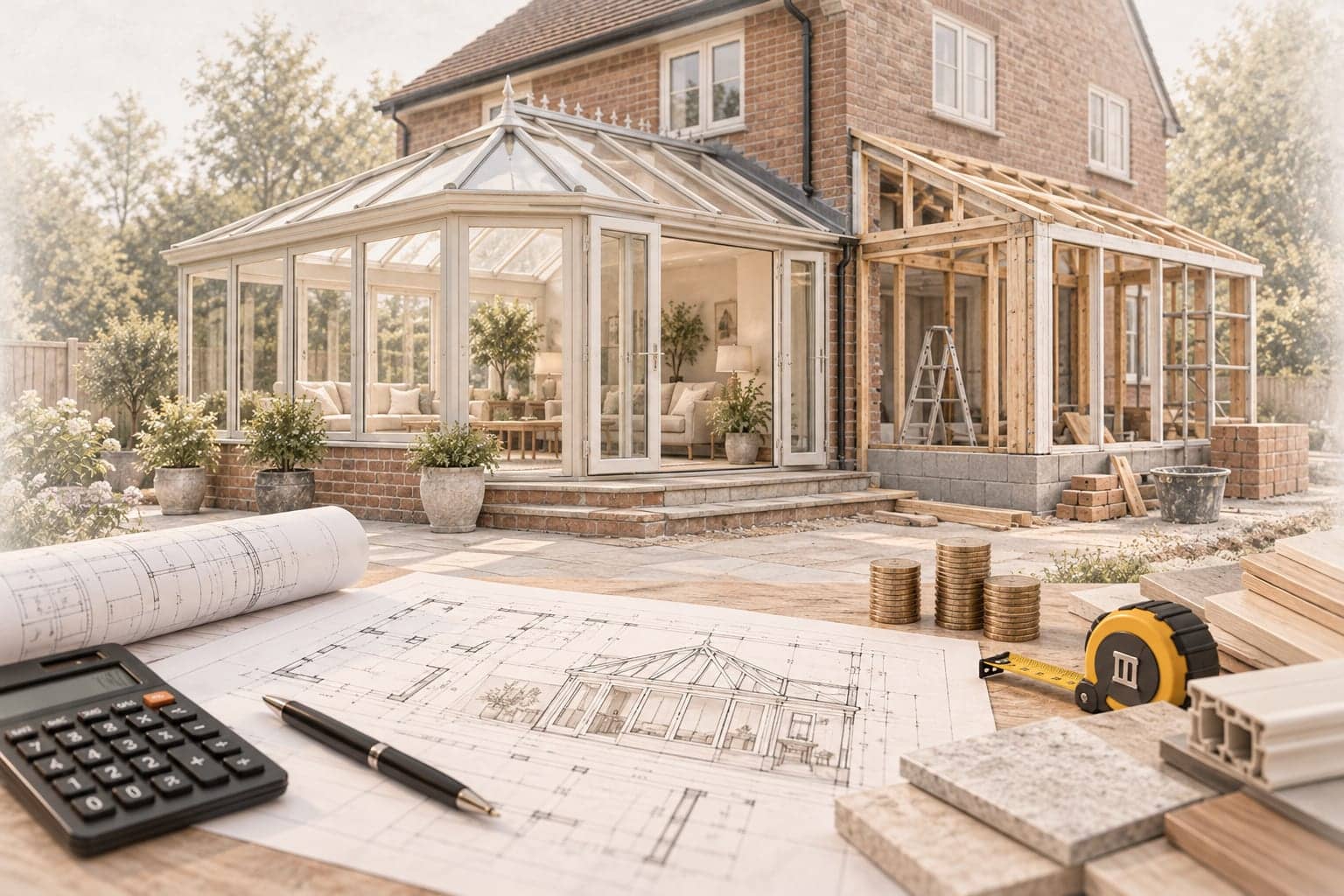
This guide breaks down realistic budgeting ranges, the details that shift a quote, and what to check before you compare builders. Treat every figure below as a planning tool rather than a fixed price, and confirm current rates before you commit.
How Much Does a Conservatory Cost?
A sensible starting budget sits between £15,000 and £40,000, sometimes more. The final figure depends heavily on size, frame material and roof specification. A compact design usually costs less than a larger style with premium glazing and an insulated roof system.
These figures work as planning tools, not fixed quotes. Drawings, surveys and site conditions will always refine the real number once a project moves forward.
Compare every quote against an identical written scope. That way, no single contractor prices a fuller job than another. Always confirm whether VAT, waste removal, scaffolding and finishing work sit inside the total, since early figures often leave these costs out.
Average Conservatory Prices by Type
Style has a major effect on cost, even when two designs cover a similar floor area. A basic design typically sits at the lower end of the range, while an orangery-style or Edwardian build carries a noticeable premium.
Roof choice, glazing specification and groundworks all pull the total in different directions. Underfloor heating, bi-fold doors and higher-spec frames push the figure up further still.
Ask each builder for identical assumptions on materials and finish. That way you compare genuinely equivalent options, rather than two very different scopes dressed up as the same job.
Lean-to Conservatory Cost vs Victorian and Edwardian Styles
Lean-to conservatory cost tends to sit below other styles, largely because the roof structure is simpler and less material is needed overall. Victorian and Edwardian designs bring more glazing, decorative brickwork and often a larger footprint, which increases the price.
The cheaper option is not automatically the right choice for every property. Suitability depends on the existing structure, local planning rules, drainage and the finished look you actually want.
When comparing styles, ask what is driving the price difference. Sometimes it genuinely reflects more materials and labour; other times it simply reflects a fuller specification that you may not actually need.
Material and Glazing Costs
Frame material makes a noticeable difference, whether you choose uPVC, timber or aluminium. Glazing upgrades, such as solar control glass or an insulated roof panel system, add to the price too.
Typical scope usually covers foundations, frame, glazing, roof, doors and basic electrics. Ask your contractor to list exclusions clearly, particularly where the existing property has not been fully surveyed.
Small specification choices add up quickly. A single upgrade, like triple glazing or a tiled roof, can shift the total by several thousand pounds. Colour finishes and hardware grade matter too, though they usually move the price less than structural choices.
Foundations, Heating and Electrical Work
Groundwork and services are where budgets tend to drift furthest from the original estimate. Poor ground conditions, ageing drainage or unexpected wiring can all add unplanned cost once work starts.
Confirm early how any hidden issues will be priced and approved. Agree this in writing rather than relying on an informal conversation once the build is underway.
A written variation process protects both the homeowner and the builder. It also keeps the final bill closer to what you originally budgeted for and gives both sides a clear record if a dispute arises later.
What Affects Conservatory Prices?
Size, frame material, glazing and access sit among the biggest drivers behind the overall figure. A small change in one area, such as extending the glazing or discovering weak ground, can shift the total considerably.
Heating, internal finish and how easily materials reach the site all matter too. Restricted access or a tricky site can add the need for scaffolding, extra labour or specialist equipment.
A transparent quote flags any allowance or provisional sum rather than folding it into one vague total. If a builder cannot confirm an item upfront, ask them to state that clearly in writing.
Conservatory vs Extension Costs
Homeowners often compare a conservatory against a full extension before settling on a route. An extension will normally cost more overall but can offer better insulation and comfort all year round.
A conservatory is generally quicker to build and cheaper per square metre. However, it may suit occasional use more than everyday living, depending on glazing and heating choices.
Think honestly about how the space will be used before choosing between the two. That decision affects budget, planning requirements and the long-term value of the work.
Resale value is worth a thought too. A well-built conservatory can add appeal for future buyers, though a poorly specified one rarely adds much beyond its own cost.
Extra Costs to Budget For
Several costs sit outside the main build price. While many conservatories fall under permitted development, planning permission may be required depending on size, position and local rules.
Building Regulations approval is usually needed for structural work, glazing standards and electrical installation. Check with your local authority before assuming permitted development covers everything.
Base and groundworks can vary hugely depending on soil type and slope. A sloping garden will cost more than a flat site, for instance.
Internal finishes, such as flooring, blinds and decorating, frequently sit outside the base quote. Cost these separately so the final total does not catch you out later.
Keep a contingency budget separate from the main specification. Its job is to cover genuine unknowns, not to fund changes you decide to make once work is underway.
Insurance and warranties deserve attention too. Ask whether the installer offers an insurance-backed guarantee, and check how long cover lasts for the frame, glazing and roof individually.
Getting an Accurate New Conservatory Cost
A new conservatory cost becomes far easier to pin down once every builder works from identical information. Share room sizes, product expectations, access notes and a written scope with each contractor you approach.
Compare inclusions rather than headline totals. Check that VAT, scaffolding, waste removal and warranties are all accounted for before you judge one quote against another.
If two quotes sit far apart, ask why before assuming the cheaper option offers better value. A missing item is usually cheaper to fix now than halfway through the build.
Compare Builders can help you move from a rough budget to suitable, vetted professionals without a flood of cold calls. Try the cost tool to see a realistic budget range, or start your project and compare local builders today.
Conservatory Cost FAQs
Is the price guaranteed?
No. This guide gives you a budgeting starting point, not a fixed price. The final figure depends on the exact scope, property and contract.
Should I get more than one quote?
Usually, yes. Comparable quotes help expose omissions and unusually high or low allowances.
How much contingency should I keep?
Around 10–15% is a common starting point, with more allowed for older or uncertain properties.
Can I reduce the cost?
Simplifying the design, keeping services in one place and deciding finishes early can help. Cutting structural, waterproofing or electrical work is a false economy.
What should I do first?
Set a realistic budget, define the scope, then compare suitable builders using the same information.