Builder Reviews: What Should You Actually Trust?
A five-star rating feels reassuring, but it is not sufficient on its own. Builder reviews are useful evidence, but the strongest picture comes from combining review patterns with references, business checks and a proper written quote.
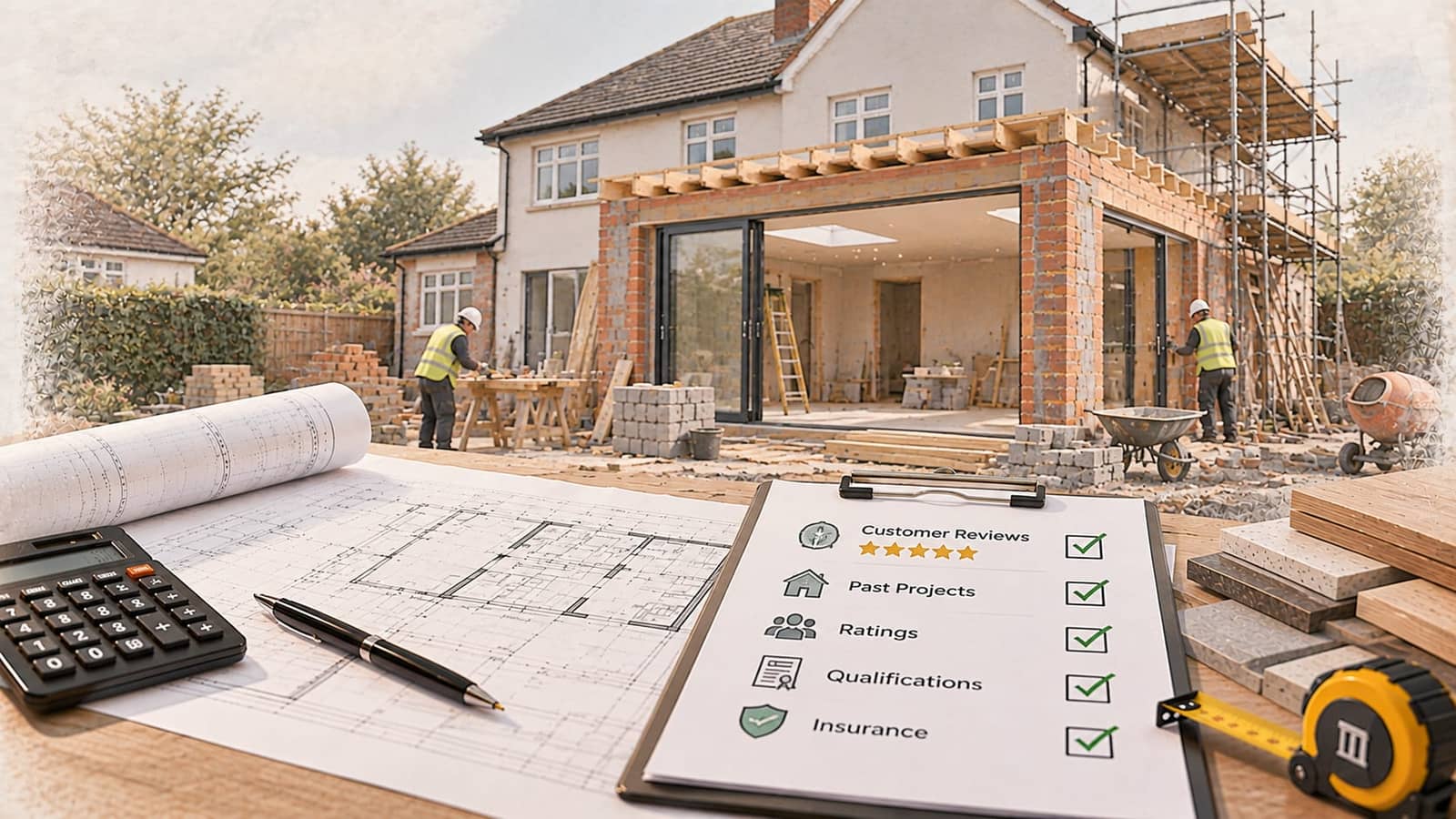
This guide explains what trustworthy builder review evidence looks like, what to ignore and how to build a picture you can actually rely on.
Why Builder Reviews Matter
Hiring the wrong contractor is expensive to fix. Builder ratings give you a starting point, but a single number averaged across dozens of jobs tells you very little about how a builder will perform on your specific project.
Reviews matter most when they are recent, detailed and consistent across more than one platform. A builder with twenty detailed, traceable reviews from verified customers is a stronger prospect than one with three hundred vague five-star ratings and no supporting evidence.
The goal is not to eliminate every possible risk. It is to avoid problems that could have been identified before work started.
Where Should You Check Builder Reviews?
Do not rely on a single platform. Cross-reference different sources, including the builder's own website, Google, Trustpilot, Checkatrade or similar directories, and any relevant trade association listings.
Pay attention to the pattern across platforms rather than the average score on any one of them. A builder with consistently strong feedback across several independent sources is more credible than one whose reviews are concentrated in a single place.
Look at the dates. A profile built on reviews from three years ago tells you little about current performance. Recent feedback is more relevant. Also note how recently the builder has been active on the platform and whether the reviews correspond to the type of work you are planning.
What Makes a Builder Review Trustworthy?
Useful reviews for builders share certain characteristics. They name or describe the project type, give a sense of how the job was managed and mention specific details about communication, punctuality, how variations were handled, tidiness on site and snagging.
Generic praise is less convincing. "Great job, highly recommend" with no further detail could apply to any trade on any project. Reviews that describe actual events are harder to fabricate and more useful to read.
Also look at how the builder responds to criticism. A contractor who replies to a negative review calmly and constructively is demonstrating something about how they handle problems. A contractor who responds defensively or not at all is showing you something too.
How to Spot Fake or Misleading Reviews
Warning signs include a sudden cluster of five-star reviews posted within a short period, repeated phrasing across multiple reviews, no detail about the actual work and feedback that does not match the services the builder advertises.
None of these individually proves that a review is false. A cluster of signals, however, is worth a closer look. Search the business name independently. Check whether the reviewer profiles look genuine. Read the lower-rated reviews as well as the top ones.
Check builder reviews on platforms that verify whether the reviewer has actually used the service. On platforms without verification, treat the content with appropriate caution.
Why Star Ratings Are Not Enough
A 4.9-star average can mask a pattern of complaints in the detail. A 4.3-star average with consistently thoughtful responses and specific project descriptions may tell a more useful story.
Builder ratings give you a quick filter, not a final answer. They are a starting point for an investigation, not a substitute for it.
The most reliable signal is consistency: consistent scores across platforms, consistent feedback themes and a consistent pattern in the gap between the quote and the final cost mentioned in reviews. If multiple reviewers note that the final bill came in significantly above the original figure, that is relevant information regardless of the overall star score.
What Else Should You Check Before Hiring?
Reviews alone are not enough. Combine them with the following:
Insurance. Ask for current public liability insurance and, where relevant, employers' liability insurance. A certificate is not a formality. It is the document that helps protect your property if something goes wrong on site.
Business registration. Check that the company exists at Companies House if it trades as a limited company. Confirm that the trading name matches what is on the quote and the insurance certificate.
References. Ask for two or three references from recent projects similar in type and value to yours. Speak to them directly rather than relying on written testimonials selected by the builder.
A written quote. A strong review profile does not replace a properly structured quote. Both are necessary. Neither replaces the other.
If any of this information is incomplete, inconsistent or slow to arrive, ask questions before you proceed.
How Compare Builders Approaches Verification
When a homeowner submits a project through Compare Builders, the platform builds a pool of verified tradespeople suited to that job. Up to six are shown to the homeowner, ranked transparently by their Trust Portfolio, which analyses verification depth, reviewed work, vetted project photos and track record. The homeowner selects three to quote. The subscription tier never overrides that ranking.
Verification is the entry gate. Every builder a homeowner sees has already passed the platform checks. Those checks reduce obvious risks. They do not replace your own final review of the quote, insurance documents and references for your specific project.
Start your project through Compare Builders and begin with builders who have already been verified.
Questions to Ask a Previous Customer
Ask for references from projects genuinely similar to yours in type and value. When speaking to a previous customer, cover the following:
- Did the final price stay close to the original quote?
- How were variations and changes handled?
- Was the programme realistic and kept to?
- How did the builder deal with snagging at the end?
- Would you use them again?
Viewing a completed project in person, if the previous customer is willing, tells you more than photographs alone. Arrange any visit through the builder and respect the previous customer's privacy.
Builder Review FAQs
Should I trust reviews on the builder's own website?
Treat them as supporting evidence only. A builder controls which testimonials appear on their own site. Cross-reference them with independent platforms before drawing conclusions.
How many builder reviews should a contractor have before I trust them?
Volume matters less than quality and recency. Ten detailed, recent, independently verified reviews are more useful than a hundred vague ones. A newer business with fewer reviews is not automatically less reliable, provided other checks stack up.
What if a builder has no online presence?
Ask for references directly and carry out business and insurance checks manually. No online presence is not disqualifying on its own, but it means more work for you to build a picture of their track record.
Can I rely on builder ratings from trade directories alone?
Directories differ in how carefully they vet their reviews. They are one tool, not a gold standard. Seek consensus across independent sites.
What should I do if a review raises a concern?
Ask the builder about it directly. How they respond to the question is itself useful evidence. A contractor who addresses the concern clearly and specifically is more reassuring than one who dismisses it.