Builder Insurance Check: What Should You Look For?
Hiring a builder is a big decision. Before work starts, you need to know who you are dealing with and what protection they have in place.
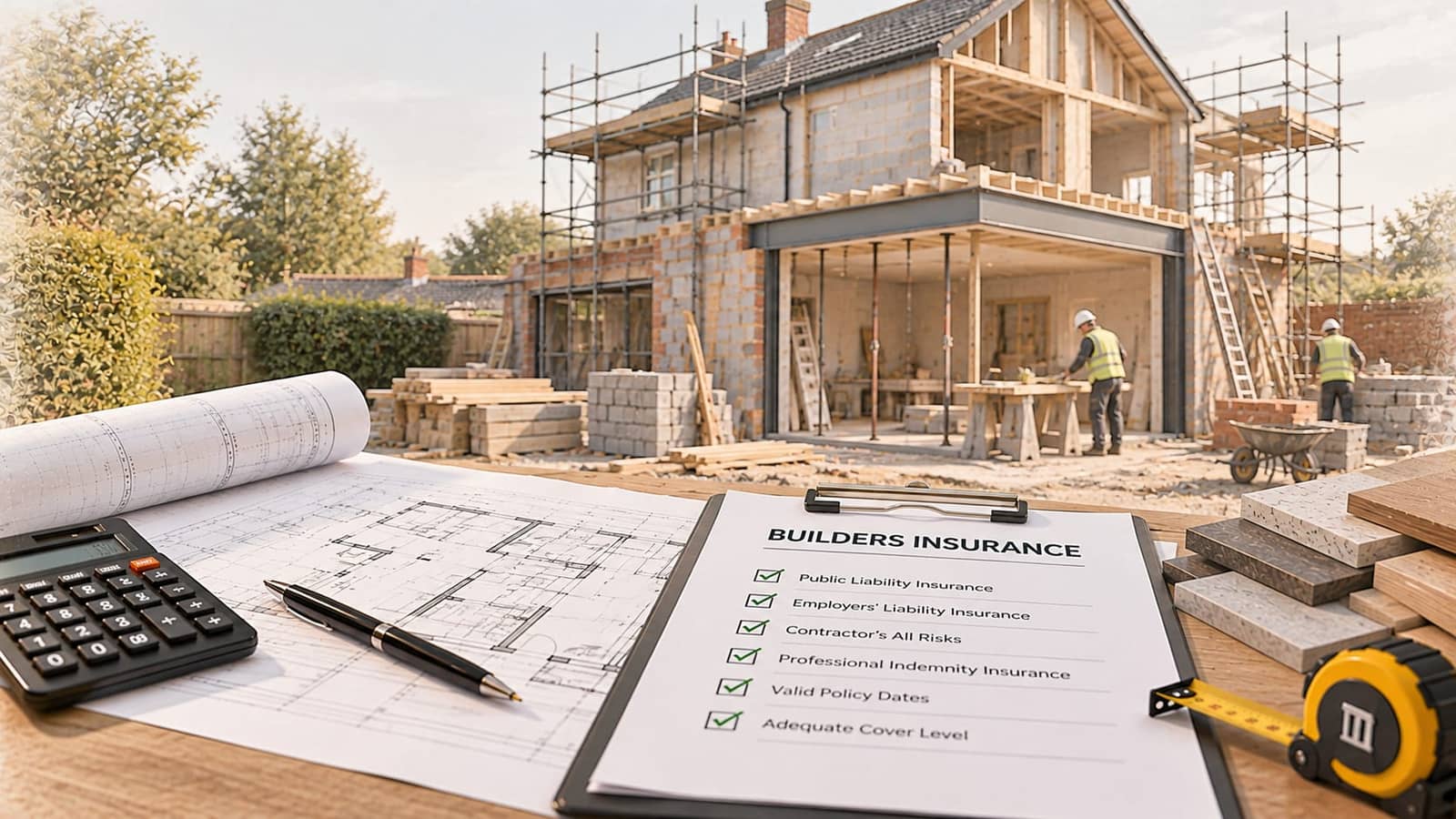
A builder insurance check is one of the basic checks worth completing before you agree to a project. It will not tell you whether the builder will do a perfect job, but it can help you spot obvious concerns early.
The key is to look at documents, check the details, and make sure they relate to the work you are planning.
Why Builder Insurance Matters
Insurance is not proof of good workmanship. It is one part of the checks you can make before giving a builder access to your property.
The main aim is to reduce avoidable risk. It also helps you understand whether the builder has taken reasonable steps to operate professionally.
You should not treat insurance as a guarantee that everything will go smoothly. Use it in conjunction with other checks instead, such as the builder's quote, references and previous work.
Taking a little time to review the paperwork can also help you compare builders on evidence rather than first impressions.
What Insurance Should a Builder Have?
The type of insurance you should expect depends on the work being carried out. Public liability insurance is one of the main policies to look for. It may respond to some claims for injury or damage to property arising out of the contractor's work.
If the builder employs staff, employers' liability insurance may also be required. Other cover can be relevant to certain projects. This may include contract works insurance or professional indemnity insurance.
There is no need to assume that every builder requires every type of policy. The important point is to consider the work involved and whether the cover matches it.
Public Liability Insurance Explained
A public liability insurance builder policy can provide cover for certain claims involving injury or damage to property arising from the builder's work. This matters because building work can involve activity around your home, other properties and people.
Ask the builder for their current certificate rather than relying on a verbal statement. The document should give you enough information to understand what cover is in place.
Verify the policyholder, dates, limits and business activities shown on the certificate. These details can help you to see if the policy applies to the builder you are considering and the work you want done.
Employers' Liability Insurance
Employers' liability insurance is another type of cover that may be relevant when a builder has employees. It is separate from public liability insurance and should not be treated as the same thing.
When reviewing the builder's documents, check that the details are clear and current. If you are unsure which cover applies to the project, ask the builder for an explanation before work begins.
The aim is not to collect paperwork for the sake of it but to understand what the builder has in place before you commit to the project.
Contract Works and Professional Cover
Some projects can involve additional risks, making other forms of insurance relevant. Contract works insurance can cover the works, materials and certain site risks while a project is underway.
Professional indemnity insurance may be relevant where a contractor or designer is providing professional design advice. The right cover depends on the project. A simple job might not require the same arrangements as a larger, more complex or odd job.
For work with more complex requirements, consider what protection you expect before contracts are signed.
How to Check a Builder's Insurance
Knowing what to look for makes it easier to check builder insurance without turning the process into a complicated exercise. Start by asking for the current insurance certificate. Do not rely only on something the builder tells you verbally.
Check the policyholder's name and compare it with the business name shown on the quotation. Look at the policy number, type of cover, limit of indemnity, and expiry date. You should also check whether the work you are commissioning falls within the activities described by the policy.
If any information looks unclear, ask the builder to explain it before making a payment or confirming the appointment.
What Details Should You Verify?
A few basic details can tell you whether the paperwork deserves a closer look.
Check the following:
- Policyholder name
- Insurer
- Policy number
- Type of cover
- Limit of indemnity
- Expiry date
- Business activities covered
The information should also be consistent across the builder's documents. Compare the insurance details with the quote, contract and invoice. Company names, addresses and policyholder details should make sense together.
A difference does not automatically mean something is wrong. Ask for an explanation rather than making assumptions. Where possible, check the information directly instead of relying on a cropped screenshot.
Red Flags to Watch For
A builder insurance verification should help you identify issues before work starts. An expired document is an obvious reason to ask questions. So is a certificate showing a different name from the business you are dealing with.
Other warning signs include missing information, unclear documents, or a builder who is unwilling to provide a current certificate. You should also look closely at the type of cover. Having insurance does not automatically mean the policy covers the work you are commissioning.
One issue may have a straightforward explanation. Several concerns together are a good reason to slow down. Do not let an urgent start date or a small discount persuade you to skip basic checks. It is easier to resolve questions before the project begins.
How Compare Builders Verifies Professionals
Compare Builders uses verification as the entry point for professionals on its platform. Homeowners provide project details, including the type of work, scope, finish level, timescale, photographs, and plans where available. The homeowner and project are then reviewed and qualified for the matching process.
The matching process builds a suitable pool of 15 or more suitable tradespeople. An initial group of around 8 to 10 tradespeople can then be invited to express interest. Homeowners can see up to six verified tradespeople who have expressed interest. They then choose three to provide a quotation.
Among verified builders, the Trust Portfolio provides homeowners with further information to help them compare professionals. It considers verification depth, previous work, reviews, and track record. This process is designed to make comparison clearer. It does not replace your own checks before appointing a builder.
Builder Insurance FAQs
Is insurance a guarantee of good workmanship?
No. Insurance does not prove workmanship. It is a check you can make before choosing a builder.
What should I ask a builder for?
Ask for their current insurance certificate. Check the policyholder, insurer, policy number, cover type, limit, expiry date, and covered business activities.
Should the insurance details match the quotation?
They should be consistent with the builder's other documents. If names or details differ, ask the builder to explain the reason.
Does every builder need the same insurance?
Not necessarily. The suitable cover can depend on the type of work and the risks involved.
What if a builder will not provide their insurance certificate?
Treat this as a reason to pause and ask questions. You should understand the builder's insurance position before work starts.
What other checks should I make?
Insurance should be considered alongside the quotation, references, previous work, and contract. No single check can guarantee that a project will run perfectly.
A builder insurance check gives you another way to assess a contractor before work begins.
Take time to review the documents, compare the details, and question anything that does not make sense.